
In today’s digital landscape, few franchises have captured player imagination quite like Horizon. Currently hailed as one of the most ambitious action-adventure series, the latest installment, Horizon Forbidden West, embarks on a breathtaking odyssey that pushes both narrative and technology to new heights. This Horizon Forbidden West review delves into every aspect of the game—from its awe-inspiring world design and compelling story arcs to refined gameplay systems and technical innovations on the PlayStation 5. As players guide Aloy across diverse biomes scarred by ecological collapse, the game delivers a balanced fusion of exploration, combat, and environmental storytelling that feels deeply rewarding.
Developed by Guerrilla Games, the sequel builds upon the stellar foundations of its predecessor, introducing enhanced traversal options, deeper character interactions, and dynamic weather systems that evolve in real time. With photorealistic textures, advanced lighting, and seamless transitions between underwater and terrestrial landscapes, Forbidden West sets a new bar for open-world design. Whether you are a returning fan tracing Aloy’s journey or a newcomer seeking an arresting narrative experience, this Horizon Forbidden West review provides an in-depth look at why this year (2026) marks a pivotal moment for the genre.
Stunning Visuals and Immersive World Design
From the moment Aloy steps onto a sunlit shoreline, Horizon Forbidden West’s visual fidelity commands attention. Utilizing the PS5’s powerful GPU and ray-tracing capabilities, environments come alive with dynamic lighting that casts realistic shadows through sprawling redwood forests and glistening waves along coastal cliffs. Character models exhibit meticulous detail; you can observe every weathered line on Aloy’s face or the intricate plating on colossal machines. The world design seamlessly blends manmade ruins—such as derelict oil rigs and half-submerged cityscapes—with thriving ecosystems reclaimed by flora and fauna.
Exploration is rewarded through environmental storytelling: a vine-entangled monument hints at past civilizations, while scattered data logs uncover hidden narratives. Photographers rejoice in the robust Photo Mode, offering depth-of-field adjustments, custom filters, and a library of presets to frame perfect shots. For inspiration on real-world geological formations and coastal erosion patterns mirrored in the game, institutions like NASA provide extensive research, which the developers have subtly integrated into geological textures.
Weather systems dynamically shift—from sudden rainstorms that drench the landscape and affect machine behavior to painted sunsets that reflect off water with cinematic sheen. Wildlife roams freely, and machine herds demonstrate authentic flocking algorithms that scatter believably when provoked. The map’s expansive scale encourages thorough exploration; hidden caves, underwater caverns, and towering Tallnecks dot the terrain, each offering unique vantage points and rewarding discoveries. In today’s era of technical innovation, Horizon Forbidden West stands as a testament to what immersive world design can achieve.
Compelling Narrative and Character Development
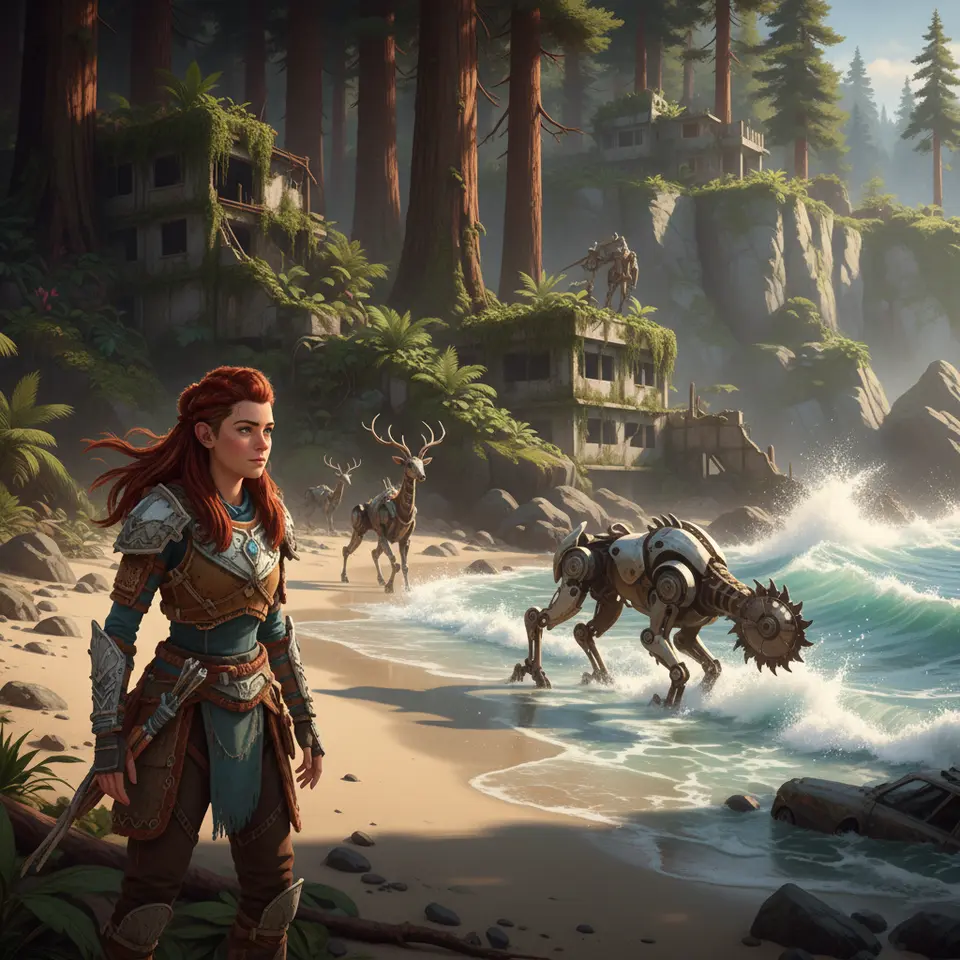 The narrative of Horizon Forbidden West picks up seamlessly following the events of the original installment, placing Aloy in a race against time to stop a mysterious ecological blight ravaging the world. This Horizon Forbidden West review highlights how the writers deepen the lore by introducing complex factions, moral dilemmas, and unexpected alliances. Alongside familiar companions, Aloy encounters new characters like Zo, a resourceful engineer with a wry sense of humor, and Beta, whose stoic presence conceals deeper motives. Sylens returns as a morally ambiguous figure whose shifting agendas keep players guessing.
Story beats unfold through a blend of in-engine cutscenes and real-time dialogue, ensuring that dramatic moments never feel artificially prolonged. Themes of environmental stewardship and cultural legacy resonate throughout Aloy’s quest, asking players to reflect on technological hubris and the cost of progress. The game leverages the DualSense controller’s adaptive triggers and haptic feedback to amplify emotional resonance—from the hushed hollows of ancient temples to the visceral tension of battling towering machines. Voice performances remain top-tier, with Ashly Burch reprising her role and delivering nuanced inflections that ground Aloy’s determination and vulnerability.
Side missions and faction quests introduce localized stories that enrich the game’s tapestry without detracting from the main plot. Whether mediating tribal disputes or uncovering encrypted archives, each activity contributes to a cohesive narrative framework. In this year (2026), storytelling in open-world games faces fierce competition, yet Horizon Forbidden West distinguishes itself through balanced pacing, rich dialogue, and stakes that feel genuinely impactful.
Enhanced Gameplay Mechanics and Exploration
Building on the robust foundation of its predecessor, Horizon Forbidden West refines traversal and crafting to elevate player agency. Aloy gains new movement abilities such as the Pullcaster, which functions both as a grappling hook and a tool for environmental puzzle solving. Underwater propulsion gear allows extended subaquatic excursions, revealing sunken ruins filled with hidden caches and lore fragments. Exploration feels more dynamic than ever, as the game world reacts believably to player presence—machine herds scatter, NPCs adjust their routines, and weather influences traversal speed.
The crafting system benefits from streamlined menus and intuitive bulk resource conversion. Gathering materials from plants, carapaces, and machine parts feeds into an organized inventory interface that highlights crafting shortcuts. Recipes update in real time as new schematics unlock, allowing you to adapt your arsenal on the fly. Skill trees are divided into distinct specializations—Warrior, Hunter, and Sharpshooter—each granting perks that support diverse playstyles. Whether you favor stealth takedowns with tripcasters, explosive traps from elemental launchers, or long-range precision shots, the skill progression accommodates targeted builds.
Side activities such as Cauldron challenges unlock machine override capabilities, enabling temporary control over robotic behemoths. Hunting grounds offer tiered combat trials, encouraging mastery of skills and rewarding rare loot. Photo Mode remains a standout feature, empowering players to document their journey with professional-grade tools. For insights into safeguarding biodiversity and designing realistic habitats, academic resources like Stanford University’s ecosystem studies serve as loose inspiration for the game’s living biomes. Overall, exploration in Horizon Forbidden West provides a rich tapestry of discovery rather than mere filler content.
Dynamic Combat and Enemy Variety
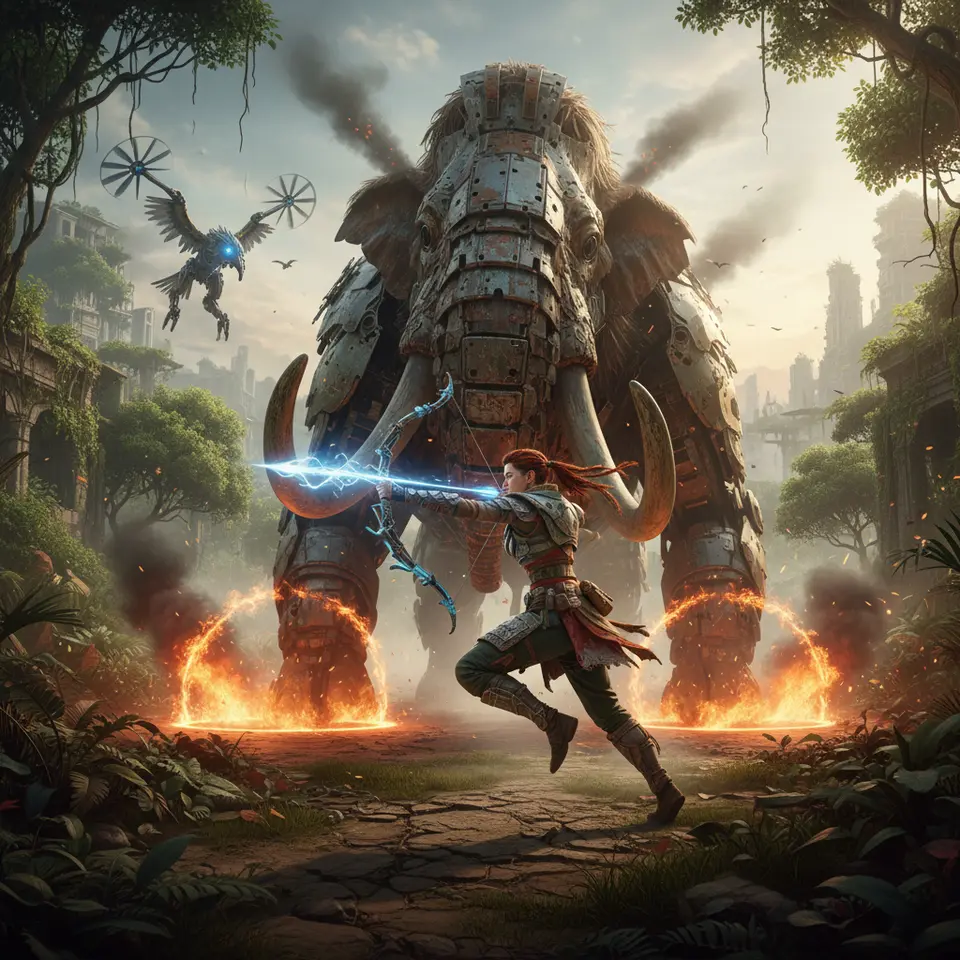 Combat in Horizon Forbidden West continues to be the series’ cornerstone, delivering an intricate blend of strategy, spectacle, and customization. Guerrilla Games expands the roster of mechanical adversaries to include new classes like the airborne Skywarden and the lumbering Tremortusk, each featuring distinct weak points that demand observational tactics. This Horizon Forbidden West review underscores how encounter design encourages players to exploit elemental vulnerabilities, setting oil canisters ablaze or freezing water sources to incapacitate foes.
Aloy’s arsenal has been enhanced with upgraded bows, slingshot-style elemental launchers, and the versatile Pullcaster. Players can lay traps, deploy tripwires, and craft specialized ammo types—ranging from incendiary arrows to shock-infused bolts. Stealth mechanics flourish in dense brush, allowing silent strikes that reward patience. Boss battles are framed as cinematic set pieces, complete with dynamic camera angles and tension-building orchestral scores that heighten every arrow draw and trap detonation.
The adaptive triggers on the DualSense controller introduce tension to each shot, simulating draw weight and resistance. Meanwhile, haptic feedback replicates environmental cues—the distant rumble of an approaching herd or the sharp crack of a distant thunderstorm—helping players anticipate threats. Enemy AI exhibits believable patrol patterns: Scrappers forage in packs, while drone swarms circle high above before launching coordinated assaults. This variety ensures every skirmish feels fresh, demanding a blend of reflexes and tactical planning.
Technical Performance and Accessibility Features
On PS5, Forbidden West offers two main performance modes: Fidelity Mode, which targets native 4K with ray-tracing at 30fps, and Performance Mode, favoring a smoother 60fps experience at dynamic 1440p. Both modes leverage the console’s SSD to deliver near-instantaneous load times, eliminating downtime between fast travel points. Occasional frame dips can arise during large-scale battles or in dense settlement hubs, but patch updates have steadily improved stability.
Guerrilla Games places strong emphasis on accessibility and quality of life. Players can customize text sizes, enable colorblind palettes, and toggle subtitle backgrounds for readability. Difficulty settings span from Story Mode—ideal for those prioritizing narrative—to Ultra Hard, which strips scouts and markers for veteran hunters. A comprehensive tutorial system introduces mechanics progressively, while on-screen prompts can be disabled for purists.
Map markers and filters help reduce clutter, allowing players to focus on preferred activities. Fast travel options expand as you discover campsites, with mounts and gliders smoothing traversal across vast distances. Menu redesigns enable quick weapon switching and one-button crafting shortcuts, so downtime between encounters remains minimal. In today’s demanding gaming environment, these accessibility measures ensure Horizon Forbidden West remains welcoming to a broad spectrum of players.
FAQ: Horizon Forbidden West
What is Horizon Forbidden West about?
Horizon Forbidden West follows Aloy as she journeys into a dangerous frontier to stop a mysterious ecological threat. The game blends exploration, combat, and storytelling in a post-apocalyptic world dominated by machine creatures.
Who developed Horizon Forbidden West?
The game was developed by Guerrilla Games and published by Sony Interactive Entertainment. It builds upon the success of its predecessor with enhanced gameplay and visuals.
What platforms is the game available on?
Horizon Forbidden West is primarily available on PlayStation 5, with optimized performance that takes full advantage of next-gen hardware features like fast SSD loading and advanced graphics capabilities.
How long is the gameplay experience?
A typical playthrough takes around 25 to 35 hours for the main story. Completionists who explore side quests, collectibles, and activities can spend 60+ hours in the game.
What makes the combat system unique?
The combat system focuses on strategy, requiring players to target specific machine weak points, use elemental damage, and switch weapons dynamically. Each encounter demands planning rather than button-mashing.
Does the game support exploration and side activities?
Yes, the game features a vast open world filled with side quests, hidden locations, puzzles, and activities like Cauldrons and hunting grounds. Exploration is a key part of the experience.
Are there accessibility options in the game?
Horizon Forbidden West includes extensive accessibility features such as customizable difficulty levels, subtitle settings, colorblind modes, and control remapping to suit different player needs.
What new features are introduced in this sequel?
New features include improved traversal tools like the Pullcaster, underwater exploration, enhanced AI, dynamic weather systems, and deeper skill trees for character progression.
Is Horizon Forbidden West beginner-friendly?
Yes, the game offers Story Mode and guided tutorials, making it accessible for new players while still providing challenges for experienced gamers.
Is Horizon Forbidden West worth playing in 2026?
Absolutely. Horizon Forbidden West remains one of the best open-world action-adventure games, offering stunning visuals, engaging gameplay, and a rich narrative experience.
Conclusion
In this Horizon Forbidden West review, we’ve explored how Guerrilla Games delivers a landmark sequel that excels across every dimension. From its photorealistic landscapes and intricate world-building to the refined combat systems and robust accessibility features, the game embodies the pinnacle of open-world design today. Storytelling is deepened through compelling character arcs and environmental themes that resonate in this year (2026), while technical performance on the PS5 pushes hardware capabilities without sacrificing stability.
While occasional frame rate dips and side-quest repetition persist, they pale in comparison to the sheer breadth of experiences on offer. Whether you are scaling towering Redwood canopies, unraveling ancient mysteries beneath the waves, or engaging in high-stakes battles against mechanical behemoths, Horizon Forbidden West stands as an unforgettable journey. For both series veterans and newcomers alike, this game is a must-play testament to the power of immersive storytelling and cutting-edge technology in modern gaming.
Read more about this topic: Madden NFL 26 Game Review: Everything You Need to Know