
Released back in 2015, Fallout 4 took the gaming world by storm with its sprawling post-apocalyptic wasteland, deep crafting systems, and that unmistakable Bethesda charm. But nearly a decade later, with newer titles dominating the spotlight, is this classic RPG still worth your time?
This Fallout 4 game review digs into everything that makes the game tick—from its gripping story and combat to its base-building mechanics and modding community. Whether you’re a returning Vault Dweller or a newcomer curious about the hype, you’ll find out exactly what to expect before you boot it up.
By the end, you’ll have a clear picture of where Fallout 4 shines, where it stumbles, and whether it deserves a spot in your gaming library in 2026.
A Quick Look at the Fallout 4 Story
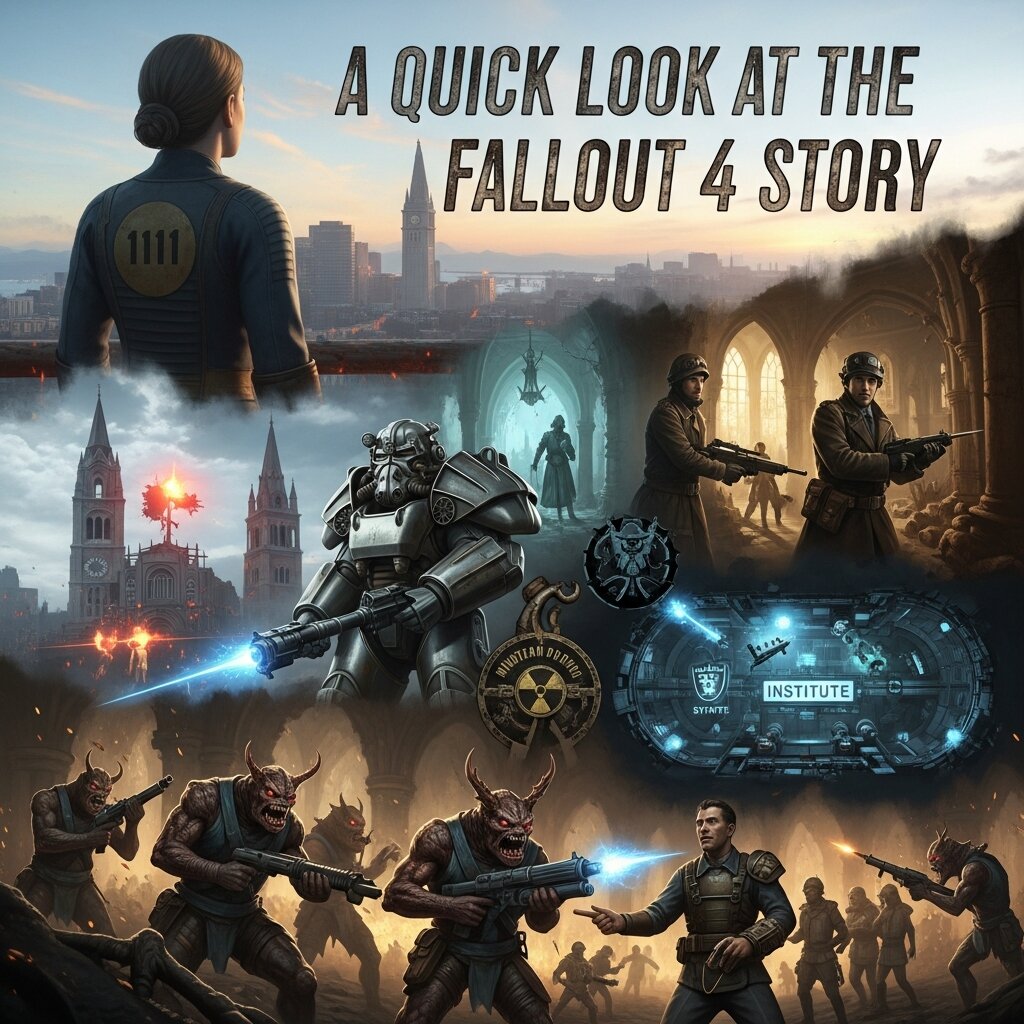 Fallout 4 drops you into the shoes of the Sole Survivor, a parent who emerges from cryogenic sleep in Vault 111 to find the world reduced to radioactive rubble. Your spouse is dead, your infant son Shaun has been kidnapped, and the Commonwealth—a ruined version of Boston—stretches out before you, full of danger and mystery.
The central quest revolves around finding your missing child, but that’s just the surface. As you explore, you’ll get tangled up in a web of competing factions, each with its own vision for rebuilding society. The Minutemen want to protect settlers. The Brotherhood of Steel seeks to control dangerous technology. The Railroad fights for synthetic human rights. And the mysterious Institute lurks beneath it all.
This faction system gives the story real weight. Your choices shape the ending, and siding with one group often means betraying another. It’s a setup that encourages multiple playthroughs, especially for players who love to see how different decisions ripple across the wasteland.
That said, the writing doesn’t always hit the mark. Some critics felt the main story lacked the moral complexity of earlier entries like Fallout: New Vegas. The voiced protagonist, while immersive, also limits dialogue options compared to the silent heroes of past games.
How Does the Gameplay Hold Up?
Gameplay is where Fallout 4 truly excels, even by today’s standards.
Combat That Feels Satisfying
Bethesda overhauled the shooting mechanics for this entry, and it shows. Gunplay feels tighter and more responsive than in Fallout 3 or New Vegas. You can switch between first and third-person views, and the iconic V.A.T.S. system returns—letting you slow down time to target specific body parts on enemies.
Whether you’re blasting raiders with a shotgun or sniping mutants from a distance, combat stays engaging hour after hour. The variety of weapons, from laser rifles to homemade pipe pistols, keeps things fresh throughout the long campaign.
A Crafting System with Endless Depth
One of the biggest additions in Fallout 4 is its robust crafting system. You can scavenge junk from across the wasteland and break it down into raw materials. These materials let you modify weapons, upgrade armor, and brew chems.
This system rewards exploration. That seemingly useless desk fan? It contains valuable screws and gears. Suddenly, hoarding random clutter becomes a strategic part of survival.
Settlement Building: Love It or Skip It
Perhaps the most divisive feature is settlement building. You can claim plots of land, construct buildings, set up defenses, and recruit settlers to populate your new communities.
For some players, this becomes an addictive sandbox—a chance to build the perfect post-apocalyptic town. For others, it feels like a distraction from the main adventure. The good news? You can largely ignore it if it’s not your thing, though a few quests do require basic settlement knowledge.
Exploring the Commonwealth Wasteland
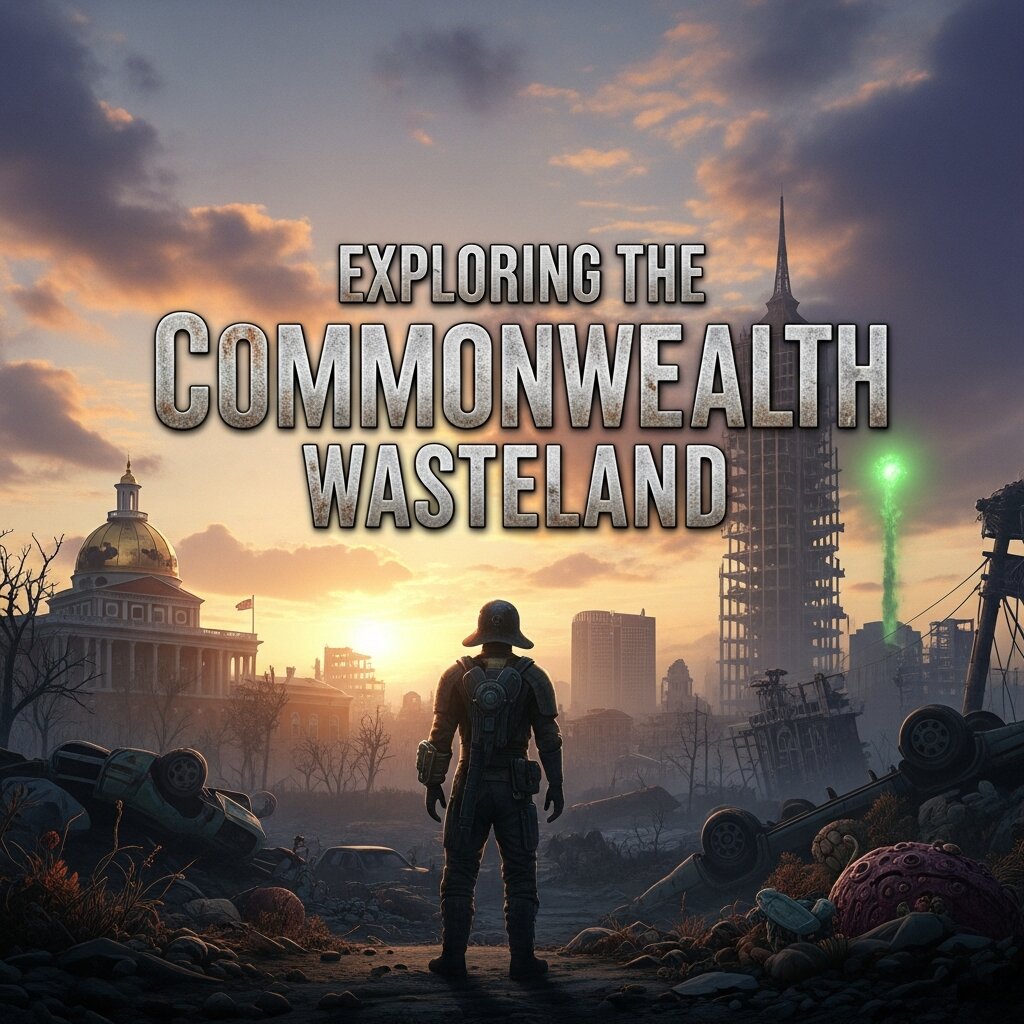 Bethesda games live and die by their open worlds, and the Commonwealth delivers a memorable one.
The map is packed with detail. Crumbling skyscrapers, irradiated swamps, abandoned subway tunnels, and quirky settlements all beg to be explored. Around every corner lies a hidden story—a skeleton clutching a teddy bear, a terminal revealing a tragic backstory, or a stash of loot guarded by deadly creatures.
Environmental storytelling is one of the game’s greatest strengths. You rarely need text to understand what happened in a location. The scene tells you everything.
Side quests also shine here. Many of them are more memorable than the main story, featuring everything from a hardboiled detective synth to a theatrical group of raiders living in a museum. Exploration never feels like a chore because there’s always something interesting waiting just over the next hill.
Graphics and Performance in 2026
Let’s be honest—Fallout 4 wasn’t a graphical powerhouse even at launch, and the years haven’t been entirely kind.
Character models can look stiff, and facial animations sometimes border on awkward. The lighting and environmental design, however, still create a convincing and atmospheric wasteland. Sunsets over ruined Boston can be genuinely beautiful.
On modern hardware, the game runs smoothly, and load times are quick on current consoles and PCs with solid-state drives. Bugs and glitches do appear—this is a Bethesda game, after all—but they’re rarely game-breaking.
If you want a visual upgrade, the PC version supports countless graphical mods that can dramatically improve textures, lighting, and character models.
The Modding Community: A Game-Changer
No Fallout 4 game review would be complete without mentioning mods.
The modding community has kept this game alive and thriving years after release. Thousands of free mods are available, ranging from simple tweaks to massive overhauls. You can add new weapons, quests, companions, and even entire questlines created by fans.
Want to make survival mode brutally realistic? There’s a mod for that. Prefer to turn the wasteland into a colorful playground? You can do that too. This endless customization gives Fallout 4 nearly unlimited replay value, especially on PC.
Console players can access mods as well, though the selection is more limited than on PC.
How Does Fallout 4 Compare to Other Games?
If you’re weighing your options, it helps to see how Fallout 4 stacks up against other popular titles people often research.
A typical Undertale game review praises that title for its clever writing, emotional storytelling, and innovative combat—qualities packed into a much smaller, indie-scale experience. A Split Fiction game review tends to highlight cooperative play and inventive level design built for two players. Meanwhile, a Roblox game review focuses on user-generated content and social gaming aimed at younger audiences.
Fallout 4 occupies a different space entirely. It’s a massive single-player RPG built for players who crave deep exploration, customization, and dozens (or hundreds) of hours of content. If you enjoy losing yourself in an enormous open world, Fallout 4 offers far more raw playtime than most of these alternatives.
For educators searching for review games for students, it’s worth noting that Fallout 4 carries a mature rating due to violence and themes. Lighter titles are better suited for classroom settings, but Fallout 4 remains a fantastic study in environmental storytelling and game design for older learners.
What’s the Verdict? Pros and Cons
Here’s a quick breakdown to help you decide.
What We Loved
- Satisfying combat with improved gunplay and the classic V.A.T.S. system
- Deep crafting and customization that rewards exploration
- A massive, detailed open world filled with memorable side quests
- Endless replay value thanks to faction choices and the modding community
- Strong atmosphere and excellent environmental storytelling
Where It Falls Short
- A weaker main story compared to earlier Fallout games
- Limited dialogue options due to the voiced protagonist
- Dated character models and occasional bugs
- Settlement building that won’t appeal to everyone
Survival Mode: A Whole Different Challenge
Survival Mode transforms Fallout 4 from a standard open-world RPG into a much more intense and realistic survival experience. In this mode, you can no longer rely on fast travel, meaning every journey across the Commonwealth must be planned carefully. Hunger, thirst, fatigue, and disease become constant threats, forcing players to manage resources more strategically than ever before. Combat also becomes deadlier, where both enemies and the player deal significantly more damage, making every encounter risky. Even saving your progress requires sleeping in a bed, adding tension to exploration. This mode appeals to hardcore players who want a more immersive wasteland experience. It slows down gameplay but increases the sense of realism and consequence, making every decision matter deeply in your journey.
Weapon Customization and Build Variety
One of Fallout 4’s most satisfying systems is its deep weapon customization. Almost every weapon in the game can be modified using materials gathered from scavenging the wasteland. Players can turn a basic pipe pistol into a powerful automatic weapon or upgrade a sniper rifle for better accuracy and range. Different attachments such as scopes, barrels, and receivers, allow for highly personalized playstyles. This system encourages experimentation, letting players build loadouts that match stealth, heavy combat, or balanced approaches. Combined with perks and leveling choices, the customization system creates near-endless build variety. Whether you prefer melee combat with modified power fists or long-range precision sniping, Fallout 4 gives you the tools to shape your character exactly how you want. This flexibility is one of the game’s strongest long-term replay value drivers.
Companion System and Character Relationships
 Fallout 4 features a rich companion system that adds emotional depth and tactical support to your journey. You can travel with various companions, each with unique personalities, backstories, and combat abilities. Characters like Dogmeat, Piper, and Nick Valentine bring different gameplay advantages and narrative flavor. As you interact with them, your choices influence their approval, unlocking special perks once you build strong relationships. Some companions even react to moral decisions, making the world feel more responsive and alive. They also provide combat assistance, drawing enemy fire or dealing damage in tough fights. The system encourages players to explore different companions to experience unique dialogue and story insights. This adds a layer of emotional engagement beyond combat and exploration, making your journey across the Commonwealth feel more personal and connected.
Faction Choices and Moral Decisions
The faction system in Fallout 4 plays a major role in shaping your overall experience and ending. Players must eventually choose between powerful groups such as the Minutemen, Brotherhood of Steel, Railroad, and the mysterious Institute. Each faction represents a different philosophy for rebuilding the post-apocalyptic world, forcing players to make difficult moral decisions. Aligning with one faction often means betraying another, adding emotional weight to your choices. These decisions directly affect the game’s ending and the future of the Commonwealth. While the story doesn’t always offer deep moral complexity, it still provides meaningful branching paths that encourage multiple playthroughs. This system keeps players engaged, as different choices reveal new perspectives and outcomes, making the game feel more dynamic and reactive to player actions.
DLC Expansions and Post-Launch Content
Fallout 4’s downloadable content significantly expands the base game with new stories, mechanics, and locations. Expansions like Far Harbor introduce darker narratives and a massive new island filled with mystery, while Automatron lets players build and customize robotic companions. Nuka-World offers a raider-focused storyline with an amusement park setting, adding fresh gameplay variety. Workshop DLCs further expand settlement-building mechanics, giving players more creative freedom in constructing and managing communities. These expansions add dozens of extra hours of gameplay, enhancing both story depth and sandbox features. Some DLCs are story-rich, while others focus on creativity and customization, catering to different playstyles. Overall, the post-launch content significantly increases Fallout 4’s value, making it feel like a much larger and more complete RPG experience for players willing to explore beyond the base game.
FAQ: Fallout 4 Game Review
Q1: Is Fallout 4 still worth playing in 2026?
Yes, Fallout 4 is still worth playing thanks to its open world, engaging combat, crafting system, and strong modding support, especially on PC.
Q2: How long is Fallout 4’s main story?
The main story takes around 20–30 hours, but exploring side quests and settlements can easily extend gameplay to 100+ hours.
Q3: Does Fallout 4 have good combat mechanics?
Yes, the combat is one of its strongest points, with improved gunplay, smooth controls, and the returning V.A.T.S. targeting system.
Q4: Can you ignore settlement building in Fallout 4?
Mostly yes. Settlement building is optional for many players, though a few quests require basic interaction with it.
Q5: Is Fallout 4 better than Fallout: New Vegas?
It depends on preference. Fallout 4 has better gameplay and visuals, while Fallout: New Vegas is often praised for stronger storytelling and role-playing depth.
Q6: Does Fallout 4 support mods?
Yes, Fallout 4 has a huge modding community that adds new weapons, quests, graphics upgrades, and gameplay overhauls.
Q7: What makes Fallout 4 different from other RPGs?
Its combination of open-world exploration, faction-based choices, crafting systems, and long-term mod support sets it apart from many RPGs.
So, Is Fallout 4 Worth Playing Today?
Yes—Fallout 4 is absolutely still worth playing in 2026, especially if you enjoy open-world RPGs with deep systems and endless exploration.
While its main story doesn’t quite reach the heights of Fallout: New Vegas, the game more than makes up for it with engaging combat, addictive crafting, and a wasteland that begs to be explored. Add the thriving modding community into the mix, and you have a title that can easily provide hundreds of hours of entertainment.