Keeping a classroom focused during test preparation is a common struggle for educators. When faced with pages of study guides and repetitive flashcards, students often tune out, leading to poor knowledge retention and lower test scores. The traditional methods of drilling facts simply do not resonate with every learning style.
Introducing review games for students completely shifts the classroom dynamic. Gamification takes the pressure off standard assessments and replaces it with friendly competition, teamwork, and excitement. When students are having fun, they are more likely to participate, ask questions, and actually remember the material being covered.
Finding the right activity requires looking at what fits your specific subject matter and student age group. You need tools that are easy to set up, highly engaging, and directly tied to your curriculum.
This guide explores the most effective platforms and activities available to modern educators. We provide detailed game reviews of both digital and offline options, giving you the insights needed to transform your next study session into an event your students will actually look forward to.
Why You Should Incorporate Gamification in Education
Before selecting a specific platform, it helps to understand why gamification is such a powerful educational tool. Play is a natural way for human beings to learn and practice new skills. When applied to a classroom setting, this natural inclination yields several distinct benefits.
First, games significantly reduce test anxiety. High-stakes exams can paralyze students, making it difficult for them to recall information they actually know. A game environment lowers the stakes, allowing students to make mistakes and learn from them without the fear of a failing grade.
Second, interactive activities foster a strong sense of community. Many review games require students to work in teams, encouraging collaboration and peer-to-peer teaching. Students who might be too shy to answer a question in front of the whole class often thrive when working with a smaller group of their peers.
Finally, games provide immediate feedback. Rather than waiting a week for a graded quiz to be returned, students know instantly whether they understand a concept or need more practice. Educators also benefit from this real-time data, allowing them to adjust their lesson plans and reteach topics that the majority of the class missed.
Top Digital Review Games for Students
 Technology has made it incredibly easy to gamify the classroom. Most of these digital platforms require only a screen at the front of the room and individual devices for the students. Here are comprehensive game reviews of the best digital tools available.
Kahoot!
Kahoot! is arguably the most recognizable name in classroom gamification. Teachers create a quiz, and students join using a unique pin code on their devices. The questions appear on the main screen, and students select the corresponding color and shape on their screens to answer.
The primary appeal of Kahoot! is its high energy. The platform uses catchy music and a point system based on speed and accuracy to create a thrilling, competitive environment. It works exceptionally well for quick vocabulary checks or end-of-unit summaries. However, the focus on speed can sometimes frustrate students who need more time to process the question, making it less ideal for complex problem-solving.
Quizizz
Quizizz offers a slightly different approach to the digital quiz format. Instead of projecting the questions on a main screen for everyone to answer simultaneously, Quizizz displays the questions and answers directly on the students’ devices.
This student-paced model allows individuals to read and answer at their own speed. It removes the anxiety of having to beat a ticking clock on the board, making it a highly accessible option for diverse learners. Teachers can track progress in real-time and review the data afterward to see exactly where the class struggled. Quizizz also features fun memes between questions, keeping the mood light and entertaining.
Blooket
Blooket has taken the educational world by storm by combining traditional quiz questions with a variety of unique, arcade-style game modes. Teachers host a game using a question set, and students answer questions on their devices. Correct answers earn them tokens, gold, or items depending on the specific game mode being played.
The variety is what makes Blooket stand out. In “Gold Quest,” students can steal gold from each other, adding a layer of unpredictable strategy. In “Tower Defense,” answering questions allows them to build structures to protect their base. Because the game mechanics are so engaging, students are highly motivated to answer questions correctly to advance in the game.
Gimkit
Created by a high school student, Gimkit is an interactive game show where students answer questions to earn virtual money. They can then use this money to purchase upgrades and power-ups in the game’s store, which allows them to earn even more money as the game progresses.
Gimkit requires strategy and long-term planning, making it highly engaging for older students. It also features a variety of rotating game modes, such as “Trust No One” (a mode similar to the popular game Among Us) and “Floor is Lava.” The economic aspect of Gimkit teaches resource management alongside the core academic content.
Engaging Offline Game Reviews
 You do not need an internet connection or a cart full of tablets to make learning engaging. Physical, offline review games are excellent for getting students out of their seats and burning off excess energy.
Trashketball
Trashketball is a classic classroom activity that requires almost zero prep time. All you need is a whiteboard, a soft ball or crumpled-up piece of paper, and a clean trash can.
Divide the class into teams. Ask a review question to the first team. If they answer correctly, they earn a base point. They then get the opportunity to shoot the “basketball” into the trash can from designated lines for bonus points. This game encourages physical movement and teamwork. The key to successful Trashketball is ensuring that all team members must agree on the answer before it is given, preventing one student from dominating the academic portion of the game.
Four Corners
Four Corners is a fantastic game for multiple-choice questions and getting students moving. Label the four corners of your classroom as A, B, C, and D. Read a question and its corresponding four answer choices aloud.
Give students a few moments to think, and then instruct them to walk to the corner that represents the correct answer. This provides a brilliant visual representation of the class’s understanding. If the majority of the class walks to the wrong corner, you immediately know that you need to pause the game and review that specific concept.
Jeopardy! Classroom Edition
The television classic translates perfectly to the classroom. You can create a Jeopardy board on a whiteboard using sticky notes, or use a digital template if you prefer a hybrid approach.
Organize your curriculum into five or six categories, with questions ranging in difficulty and point value. Teams take turns selecting a category and a point value. This format is excellent for comprehensive final exam reviews because it forces students to recall information across the entire breadth of the unit. To keep all students engaged, require every team to write down their answer on a whiteboard, rather than just the team that selected the question.
How to Successfully Implement Gamification
Having a great game is only half the battle; the execution determines its educational value. Poorly managed games can quickly descend into chaos or lose their academic focus.
First, establish clear rules and expectations before the game begins. Students need to know exactly how points are awarded, what constitutes acceptable behavior, and the consequences for poor sportsmanship. Keeping the environment positive and respectful is crucial for maintaining a safe learning space.
Second, ensure the content drives the game, not the other way around. The flashy graphics of Blooket or the excitement of Trashketball should be secondary to the learning objectives. Write high-quality, challenging questions that accurately reflect the format and difficulty of the upcoming assessment.
Finally, always allocate time for a debrief. A game should never end right at the bell. Stop the activity five to ten minutes early to discuss the results. Go over the questions that stumped the most students and clarify any lingering misunderstandings. This reflection period is where the actual learning is solidified.
Differentiated Learning Through Review Games
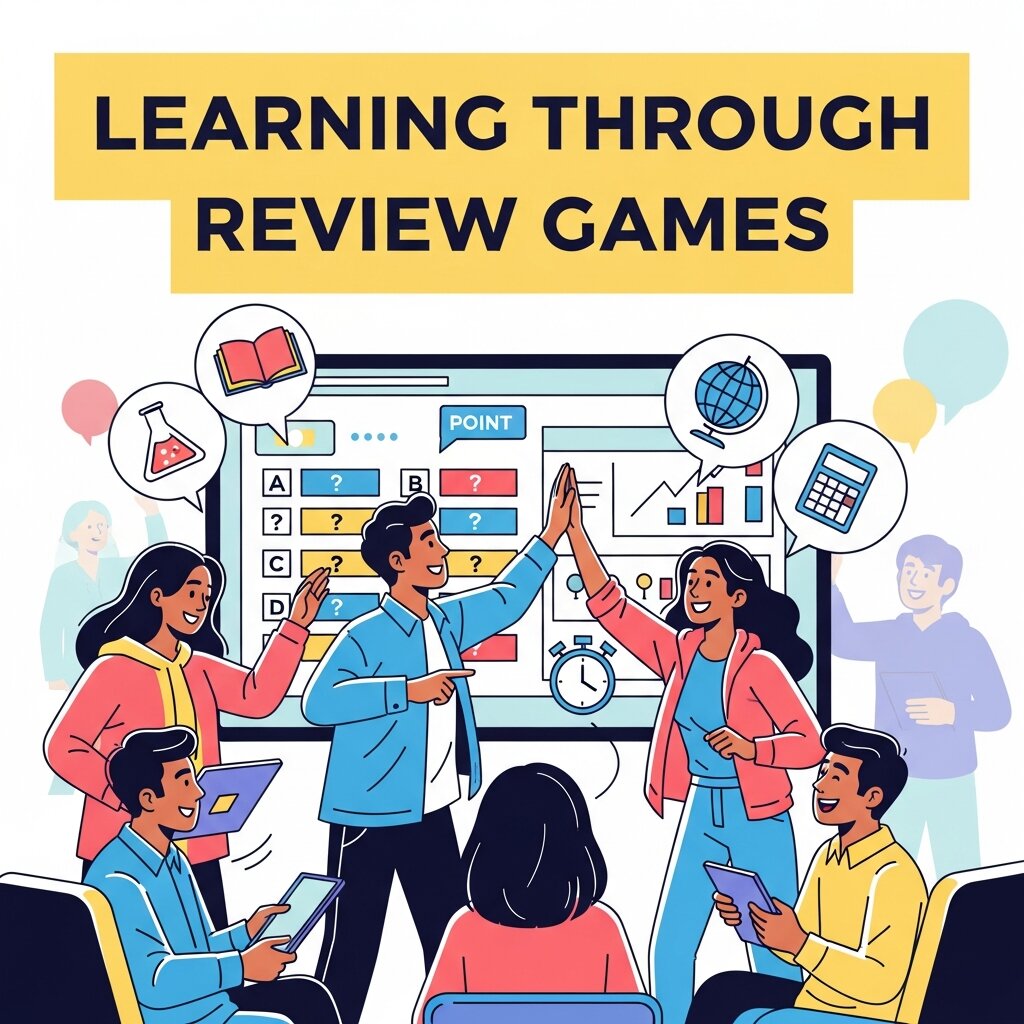 One of the biggest advantages of using review games in the classroom is their ability to support differentiated learning. Every student learns at a different pace and through different methods, and traditional teaching methods often fail to address this diversity. Review games help bridge this gap by offering multiple ways to engage with the same content. For example, fast-paced quiz games can challenge advanced learners, while student-paced platforms allow others to take their time and process information more effectively. Teachers can also adjust difficulty levels, group students strategically, or assign roles within teams. This flexibility ensures that all learners remain included and motivated. As a result, review games create a more inclusive classroom environment where every student has an equal opportunity to succeed.
Measuring Student Progress with Review Activities
Review games are not just tools for engagement—they are also powerful assessment tools. Teachers can use game-based activities to measure how well students understand a topic before formal testing. Digital platforms often provide detailed analytics, showing which questions students struggle with most and identifying overall performance trends. This data allows educators to adjust lesson plans and focus on areas that need improvement. Even offline games can serve as informal assessments by observing student responses and participation levels. By incorporating review games regularly, teachers can track progress over time and ensure continuous improvement. This approach transforms assessment into an ongoing, interactive process rather than a one-time evaluation, leading to better academic outcomes and stronger student confidence.
Frequently Asked Questions (FAQ)
1. What are review games for students?
Review games for students are interactive learning activities designed to help students revise and reinforce lesson content in a fun and engaging way. They often use competition, teamwork, or digital tools to improve participation.
2. Why are review games important in the classroom?
Review games help increase student engagement, reduce test anxiety, and improve knowledge retention. They make learning more interactive compared to traditional study methods like worksheets or lectures.
3. What are the best digital review games for students?
Some of the most popular digital review games include Kahoot!, Quizizz, Blooket, and Gimkit. These platforms allow teachers to create interactive quizzes and track student performance in real time.
4. Are offline review games effective for learning?
Yes, offline games like Jeopardy!, Trashketball, and Four Corners are highly effective. They encourage movement, teamwork, and active participation without requiring any technology.
5. Do review games help improve test scores?
Yes, review games can improve test scores by reinforcing key concepts, improving recall ability, and helping students practice in a low-pressure environment.
6. Can review games be used for all subjects?
Absolutely. Review games can be adapted for almost any subject, including math, science, language arts, and social studies, by customizing the questions and activities.
7. Are review games suitable for all age groups?
Yes, review games can be modified for elementary, middle, and high school students depending on the complexity of the questions and game format.
8. How long should a review game session last?
Most review game sessions last between 15 to 40 minutes, depending on the lesson content and class duration. It’s important to leave time for discussion and review.
9. Do students take review games seriously?
Yes, when properly structured, students take review games seriously while still enjoying the activity. Clear rules and academic-focused questions help maintain balance between fun and learning.
10. What is the best way to prepare a review game?
Start by defining learning objectives, create clear and relevant questions, choose an appropriate game format, and ensure rules are explained before starting the activity.
Level Up Your Classroom Instruction
Rethinking how you handle test preparation can dramatically alter your students’ academic trajectory. By replacing passive study habits with dynamic review games for students, you create an environment where participation is voluntary and enthusiastic.
Whether you lean toward the fast-paced digital environment of Kahoot! or the active physical movement of Trashketball, there is a game out there that fits your teaching style. Use these game reviews to experiment with different formats, track your students’ engagement, and watch as their confidence and test scores rise. It is time to bring the power of play into your lesson plans and make learning an experience they truly enjoy.